

TL;DR:
- Birmingham's high demand for accountants makes swift, clear recruitment processes essential for SMEs.
- Defining roles precisely and engaging local expertise improves hiring quality and speed.
- Partnering with specialist recruitment agencies can streamline hiring and reduce costly mistakes.
Finding a qualified accountant who genuinely understands Birmingham's business landscape is harder than most SME owners expect. You post a vacancy, receive a flood of CVs, and still end up unsure whether any candidate truly fits your needs. The competition is fierce, larger firms are always in the market, and a slow or muddled hiring process can cost you the best candidates before you even reach interview stage. This guide walks you through a clear, practical recruitment process built specifically for Birmingham SMEs, from defining your role all the way to onboarding your new hire with confidence.
Table of Contents
- Understanding the accounting recruitment landscape in Birmingham
- Preparation: Defining your accounting role and requirements
- Step-by-step recruitment process for hiring accountants
- Avoiding common pitfalls: Mistakes Birmingham SMEs make
- The truth about recruiting accounting talent in Birmingham
- Local recruitment support for your Birmingham business
- Frequently asked questions
Key Takeaways
| Point | Details |
|---|---|
| Set clear job criteria | Define your accounting role, skills, and must-haves for a better fit and faster recruitment. |
| Follow a structured process | Stepwise recruitment reduces time-to-hire and ensures high-quality candidates. |
| Use local expertise | Prioritise candidates familiar with Birmingham regulations and business networks. |
| Avoid common pitfalls | Steer clear of rushed shortlisting and neglecting cultural fit to find long-term hires. |
| Consider specialist support | Expert agencies help SMEs compete and hire better in a competitive local market. |
Understanding the accounting recruitment landscape in Birmingham
Birmingham's economy has grown considerably over the past decade, and with that growth comes a sharp rise in demand for skilled finance professionals. Manufacturing firms, professional services companies, and a booming tech sector all need reliable accountants, and they are all competing for the same local talent pool. For SMEs, this creates real pressure.
The finance recruitment trends data for 2026 confirms what many hiring managers already sense: high demand for accountants in the Birmingham area is outpacing supply. Roles requiring AAT qualifications, CIMA-level management accounting, and payroll expertise are among the hardest to fill quickly. Candidates with hands-on experience using Xero, Sage, or QuickBooks are particularly sought after by SMEs that need someone ready to contribute from day one.
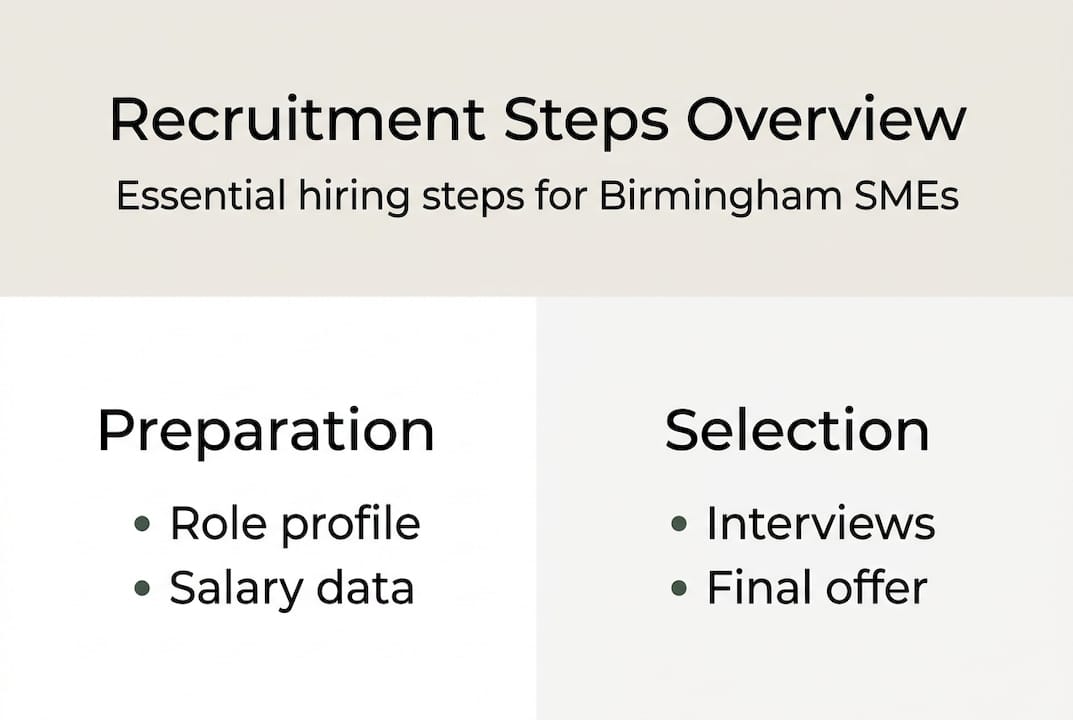
Here is a snapshot of the most in-demand accounting roles across Birmingham right now:
| Role | Key qualification | Typical time to fill |
|---|---|---|
| Bookkeeper | AAT Level 2/3 | 3 to 4 weeks |
| Management accountant | CIMA or ACCA | 5 to 8 weeks |
| Payroll specialist | Payroll certification | 4 to 6 weeks |
| Finance assistant | AAT Level 2 | 2 to 3 weeks |
Several challenges make this landscape especially tricky for smaller businesses:
- Competing with larger firms that offer higher base salaries and structured benefits packages
- Time-to-hire pressure when a vacancy is urgent and the business cannot afford a gap in financial management
- Local expertise gaps where candidates may have strong technical skills but limited knowledge of Birmingham's specific business environment and supplier networks
- Slow internal processes that cause strong candidates to accept other offers before you reach a decision
Understanding the Birmingham recruitment process in this context is essential. The market rewards businesses that move decisively and present themselves as attractive employers, not just employers with a vacancy to fill.
Preparation: Defining your accounting role and requirements
Before you advertise anything, you need absolute clarity on what you are actually hiring for. This sounds obvious, but a surprising number of SMEs skip this step and pay for it later with poor applications and mismatched hires.
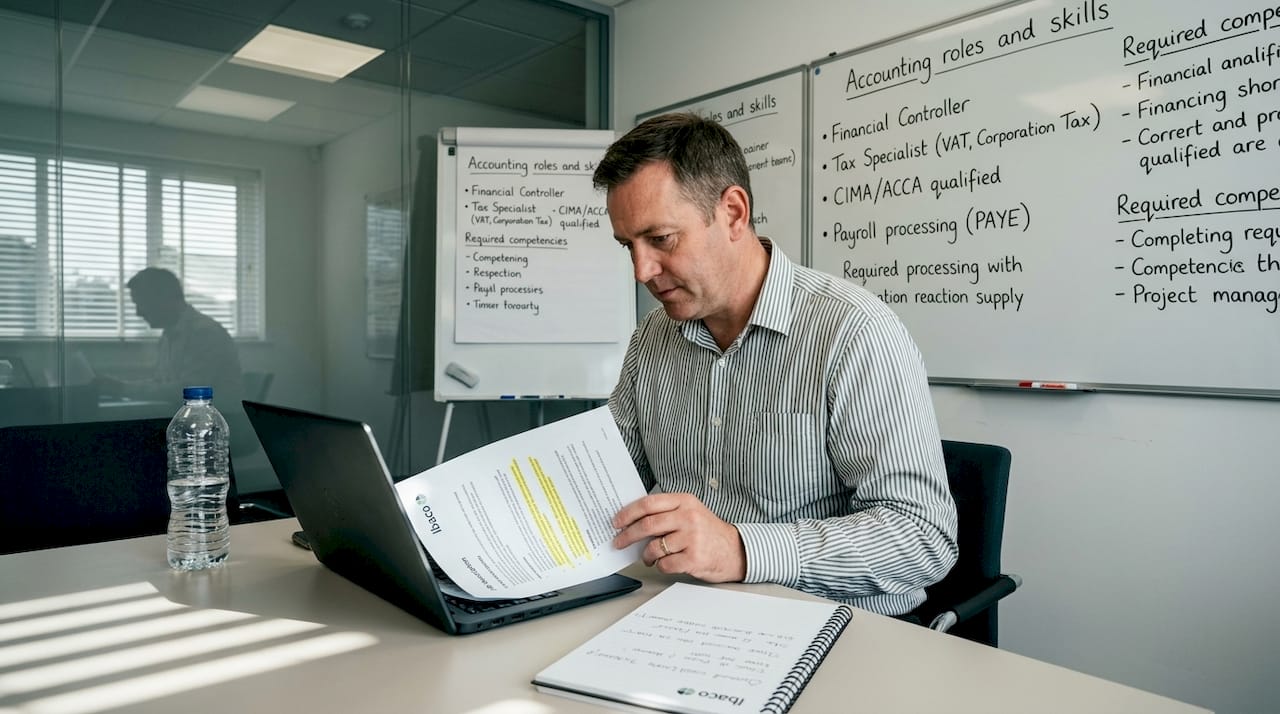
Start by identifying the specific role you need. A bookkeeper managing daily transactions is a very different hire from a management accountant producing monthly reports for board review. A payroll specialist requires different skills again. Getting this wrong at the start means your job description attracts the wrong people, and writing job descriptions that are specific and accurate results in far more relevant applications.
When drafting your job description, cover these essentials:
- Role scope: Daily tasks, reporting lines, and who the candidate will work alongside
- Key responsibilities: Be specific. "Manage accounts payable" is clearer than "support the finance function"
- Must-have qualifications: State whether you need AAT, ACCA, CIMA, or simply relevant experience
- Software proficiency: Xero, Sage, QuickBooks, or any bespoke systems your business uses
- Desirable extras: Knowledge of Birmingham's local supplier market, sector-specific experience
Salary benchmarking is equally important. Here is a rough comparison of typical salary ranges for accounting roles in Birmingham versus national averages in 2026:
| Role | Birmingham average | National average |
|---|---|---|
| Bookkeeper | £26,000 to £32,000 | £27,000 to £33,000 |
| Management accountant | £40,000 to £52,000 | £42,000 to £55,000 |
| Payroll specialist | £28,000 to £36,000 | £29,000 to £37,000 |
Birmingham salaries sit close to national averages, which means you can compete effectively without overstretching your budget, provided your wider offer is compelling.
Pro Tip: Ask your current finance staff or line managers what they wish they had known before taking their role. Their answers will reveal gaps in your existing job descriptions and help you avoid repeating the same specification mistakes.
Step-by-step recruitment process for hiring accountants
With your role clearly defined, you are ready to run the actual recruitment campaign. A structured approach here makes a measurable difference. Structured recruitment consistently reduces hiring time and improves the quality of candidates who reach interview stage.
Follow these steps in order:
- Advertise on targeted channels. General job boards attract volume but not necessarily quality. Use finance-specific boards alongside LinkedIn. Local Birmingham networks and professional groups on social media can also surface candidates who are not actively job-hunting.
- Engage a specialist agency. Recruitment agencies that focus on finance roles can speed up the process significantly and improve outcomes. They pre-screen candidates, verify qualifications, and match you with people who have relevant local experience.
- Screen CVs with clear criteria. Set a checklist before you open a single CV. Look for the required qualifications, relevant software experience, and any evidence of working within a similar-sized business in the West Midlands.
- Conduct structured interviews. Ask technical questions relevant to your business, such as how they would handle a VAT return discrepancy or reconcile a supplier account. Also ask situational questions to assess how they work under pressure and communicate with non-finance colleagues.
- Assess local knowledge. A candidate who understands Birmingham's business community, its key sectors, and common local challenges will contribute faster than someone who needs to build that context from scratch.
- Make a prompt, clear offer. Delays between interview and offer are where good candidates are lost. Have your offer parameters agreed internally before you begin interviewing.
- Onboard with structure. Provide a clear first-week plan, introduce them to key stakeholders early, and set measurable 30-day goals.
"The businesses that hire the best accountants are not always the ones offering the most money. They are the ones with the clearest process and the fastest decisions."
Pro Tip: When using accounting recruitment agencies, brief them as thoroughly as you would brief an internal hiring manager. The more context they have, the better the candidate match.
Avoiding common pitfalls: Mistakes Birmingham SMEs make
Even a well-intentioned recruitment process can go wrong. Hiring mistakes most often stem from unclear processes and rushed shortlisting, and the consequences can be costly, both financially and in terms of team morale.
Here are the most common errors to watch for:
- Skipping role definition. Hiring without a clear brief leads to candidates who look good on paper but do not fit the actual day-to-day demands of the role.
- Ignoring local talent pools. Some SMEs cast too wide a net and overlook candidates already based in Birmingham who bring immediate local knowledge and shorter commutes.
- Poor candidate communication. Slow responses, vague feedback, and disorganised interview scheduling damage your employer brand. Strong candidates will simply move on.
- Underestimating pay expectations. Offering below the local benchmark, even slightly, signals to candidates that you have not done your homework. It erodes trust before the relationship has even begun.
- Rushing the shortlist. Pressure to fill a vacancy quickly can lead to compromising on essential criteria. A bad hire costs far more in time and money than a slightly longer search.
"Candidate experience is not a nice-to-have. In a competitive market like Birmingham, it is part of your employer brand whether you manage it consciously or not."
Improving your HR recruitment strategies is an ongoing process. After each hire, gather feedback from both the successful candidate and anyone involved in the process internally. Small adjustments, such as tightening your CV screening criteria or reducing the number of interview rounds, can have a significant impact on your next hire.
The truth about recruiting accounting talent in Birmingham
Here is something that most recruitment guides will not tell you plainly: technical qualifications matter, but they are rarely what separates a great hire from a disappointing one. We see this consistently across Birmingham's SME market. A candidate with a strong AAT or CIMA qualification who lacks adaptability and local awareness will struggle far more than someone with slightly fewer credentials but a genuine understanding of how smaller businesses operate in this city.
In 2026, competing on salary alone is increasingly ineffective. Candidates, particularly those with mid-level experience, are weighing flexibility, company culture, and growth opportunities just as heavily as base pay. The firms winning the best accounting talent are those that communicate their values clearly during recruitment, not just their job requirements.
Building relationships with finance recruiters in Birmingham who genuinely know the local market also gives you a meaningful edge. They can tell you what candidates are actually looking for, which is intelligence that no job board will provide. The businesses that treat recruitment as a relationship-building exercise, rather than a transactional process, consistently make better hires.
Local recruitment support for your Birmingham business
If the steps above feel like a lot to manage alongside running your business, you are not alone. Many Birmingham SMEs find that partnering with a specialist gives them back the time and confidence to make the right hire without the stress.
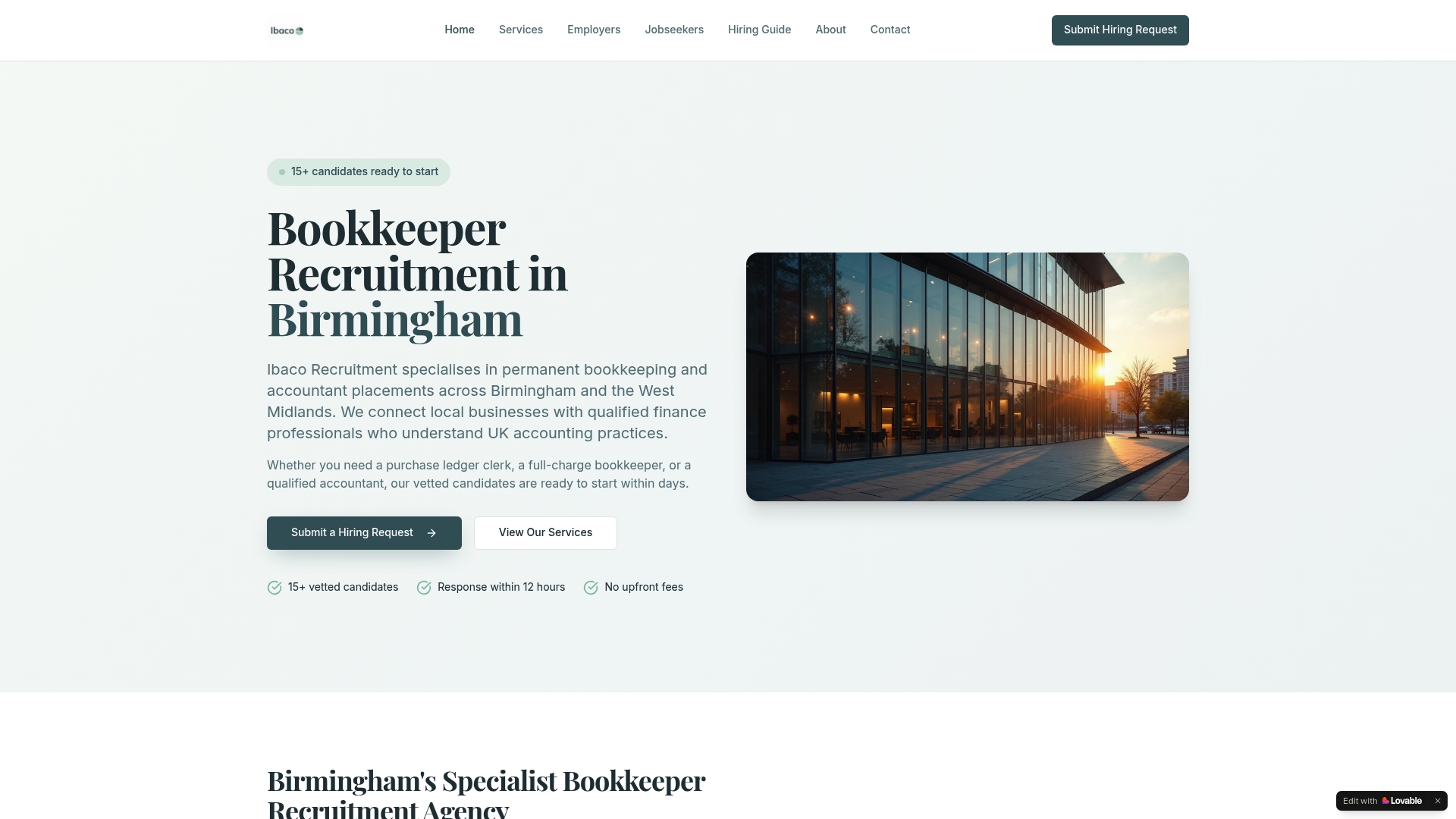
At Ibaco Recruitment, we focus exclusively on finance roles across Birmingham and the West Midlands. Our accountant recruitment services are built around your specific needs, with thoroughly vetted candidates, no upfront fees, and placements typically completed within two weeks. Whether you need a bookkeeper or a senior management accountant, we can match you with qualified local professionals who are ready to contribute. Explore how we can help you hire accountants in Birmingham and get your next hire right, first time.
Frequently asked questions
Which qualifications should I look for when recruiting accountants in Birmingham?
Look for AAT, ACCA, or CIMA certifications as a baseline, combined with practical knowledge of UK accounting standards and familiarity with Birmingham's local business practices. Software proficiency in Xero, Sage, or QuickBooks is also a strong indicator of readiness.
How long does it take to hire an accountant in Birmingham?
Structured recruitment typically takes four to eight weeks from advertising to offer, though specialist agencies can often reduce this to two weeks for well-defined roles.
What is the main challenge SMEs face when hiring accountants?
The biggest challenge is competing with larger firms that offer higher salaries, while also ensuring the candidate fits both the technical requirements and the culture of a smaller business.
Should I use a recruitment agency or hire directly?
Recruitment agencies offer local expertise and faster placements, making them particularly valuable when speed and candidate quality are priorities. Direct hiring gives you more control but typically takes longer and requires more internal resource.