

Hiring the wrong bookkeeper can cost Birmingham SMEs thousands in financial errors and operational disruption. Yet many business owners rush recruitment decisions without proper assessment frameworks. This guide walks you through a proven process to recruit qualified bookkeeping and accounting professionals in 2026, from defining role requirements through successful onboarding, helping you avoid costly mistakes and secure the right finance talent for your business.
Table of Contents
- Understanding the role and preparing your recruitment strategy
- Executing the recruitment process: sourcing and assessing candidates
- Common hiring pitfalls and how to avoid them
- Verifying your choice and onboarding for success
- Find expert bookkeeper recruitment support in Birmingham
- Frequently asked questions
Key takeaways
| Point | Details |
|---|---|
| Define role precisely | Clarify full-time, part-time or hybrid needs, required qualifications, software proficiency, and specific responsibilities before sourcing candidates. |
| Assess practically | Use real reconciliation exercises and behavioural interviews to evaluate accuracy, communication skills, and cultural fit beyond CV screening. |
| Avoid common pitfalls | Plan recruitment timing carefully, budget for total employment costs, and prioritise attitude and cultural alignment over rushed decisions. |
| Verify thoroughly | Check references, balance qualifications with hands-on experience, and create structured onboarding to maximise retention and performance. |
| Consider professional support | Specialist recruitment agencies offer vetted candidates, market expertise, and faster placement times to reduce hiring risks. |
Understanding the role and preparing your recruitment strategy
Before posting job adverts or contacting agencies, invest time defining exactly what bookkeeping support your business needs. Taking time to define the role properly is central to hiring the right employee, transforming recruitment from reactive crisis management into strategic growth planning.
Start by clarifying employment type. Does your workload justify a full-time bookkeeper, or would part-time or hybrid arrangements better suit seasonal fluctuations? Consider required qualifications carefully. AAT certification demonstrates solid foundations, but practical experience with Xero, Sage, or QuickBooks often proves equally valuable for SMEs. Bookkeeper job market insights in Birmingham show demand spans entry-level to senior positions, so match expectations to your complexity and budget.
Understand the overlap between bookkeeping and accounting tasks your business requires:
- Daily transaction recording and bank reconciliations
- VAT return preparation and submission
- Payroll processing and pension administration
- Management accounts and financial reporting
- Year-end preparation for external accountants
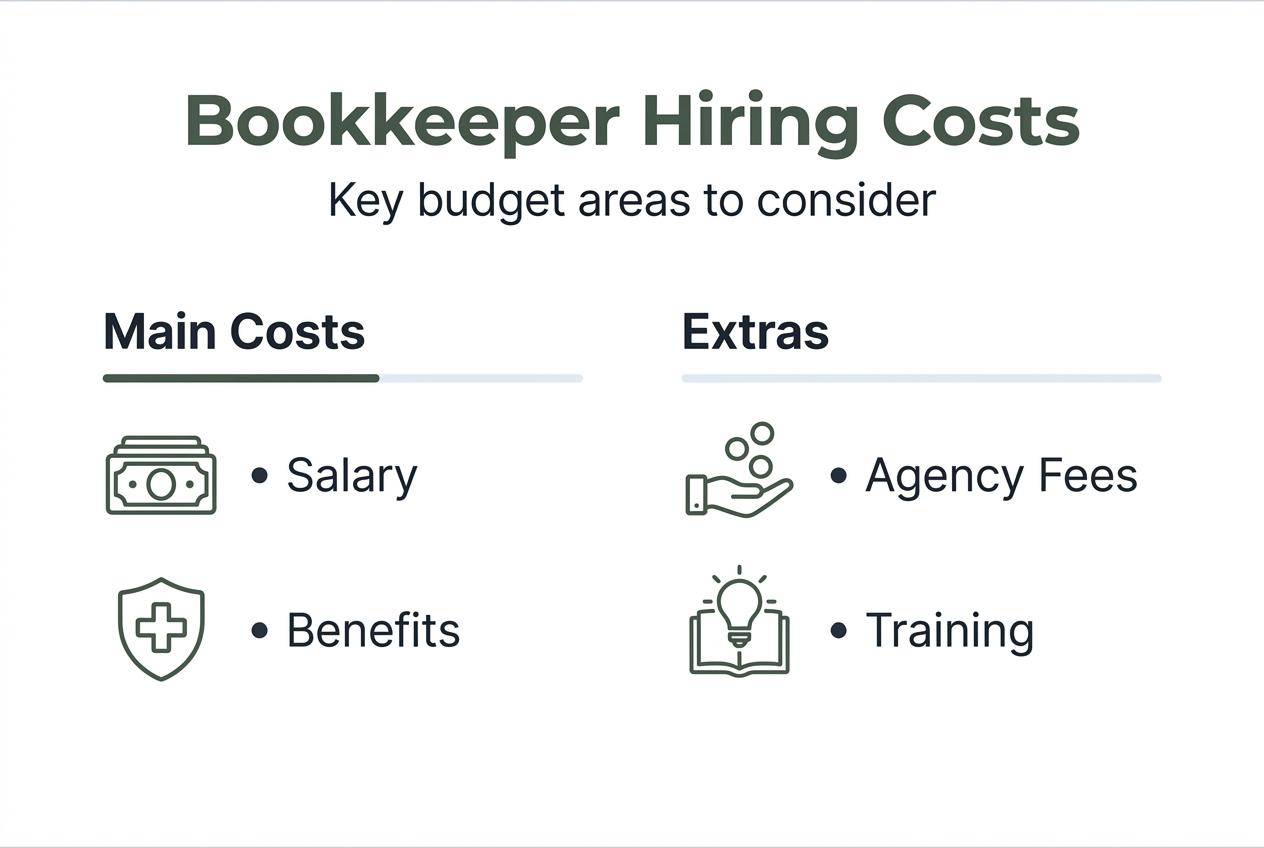
Set clear budget parameters including not just wages but total employment costs. Factor in national insurance contributions, pension obligations, training investments, software licences, and workspace equipment. A £28,000 salary often translates to £35,000 total annual cost for Birmingham SMEs.
Pro Tip: Create a detailed role description documenting daily, weekly, monthly, and annual tasks. This clarity helps candidates self-assess fit and gives you objective criteria for evaluation, making interviews far more productive.
Document must-have versus nice-to-have skills. Industry-specific experience in construction, retail, or professional services can accelerate onboarding significantly. Determine whether you need someone who can work independently or prefer candidates comfortable asking questions and collaborating with your team. Learn more about role distinctions when you hire a bookkeeper in Birmingham.
Executing the recruitment process: sourcing and assessing candidates
With role clarity established, move into active candidate sourcing using channels that attract qualified finance professionals. Specialised job boards like Reed, Totaljobs, and accounting-specific platforms yield better results than general listings. Recruitment firms focusing on Birmingham finance roles bring pre-vetted candidates and market salary intelligence.
Screen CVs systematically focusing on relevant experience markers:
- Progression in bookkeeping responsibilities over time
- Specific software systems matching your technology stack
- Industry experience aligned with your sector
- Qualification levels and ongoing professional development
- Employment stability and career trajectory
Shortlist candidates for practical assessment before interviews. Focus on accuracy and attention to detail first by testing candidates with real-world reconciliation exercises. Provide sample bank statements, invoices, and receipts asking candidates to identify discrepancies and propose corrections. This reveals technical competence and problem-solving approaches far better than hypothetical questions.
Structure interviews around three assessment dimensions:
- Technical proficiency: Discuss specific scenarios from their CV, probe software knowledge depth, explore how they handle month-end procedures
- Communication ability: Communication skills matter as much as technical ability for clear financial explanations to non-finance colleagues
- Cultural alignment: Assess working style preferences, team collaboration approach, and attitude toward continuous learning
Pro Tip: Ask candidates to walk you through their month-end close process step by step. Strong candidates provide detailed, logical sequences revealing genuine experience. Weaker ones offer vague generalisations copied from job descriptions.
| Sourcing channel | Assessment method | Interview focus |
|---|---|---|
| Specialist job boards | CV screening for qualifications and software | Technical scenario discussions |
| Finance recruitment agencies | Practical reconciliation tests | Communication and explanation skills |
| Professional networks | Reference checks on work samples | Cultural fit and working style |
| LinkedIn finance groups | Behavioural question responses | Problem-solving approaches |
Employ behavioural interview questions exploring past situations rather than theoretical responses. "Describe a time you identified a significant error" reveals more than "How would you handle mistakes?" Use follow-up probes to understand their thought process, not just outcomes. Explore relevant interview questions for bookkeepers and understand differences in bookkeeper vs accountant responsibilities to frame appropriate questions.
Common hiring pitfalls and how to avoid them
Even experienced HR managers fall into predictable recruitment traps when hiring bookkeepers. Awareness of these patterns helps Birmingham SMEs navigate the process more successfully.

Rushing the hiring process can create HR complications, low morale, and lost productivity. Pressure to fill urgent gaps tempts managers to lower standards or skip assessment steps. This penny-wise, pound-foolish approach frequently results in expensive turnover within six months, restarting the entire recruitment cycle.
Timing represents another critical mistake. Hiring too late often costs more than early hiring due to growth stalls and mistakes. When your existing bookkeeper drowns in work, errors multiply and strategic opportunities get missed. Start recruitment when you reach 70-80% capacity, not when systems collapse from overload.
Budget myopia creates false economy. Focusing solely on salary whilst ignoring total employment costs leads to nasty surprises. Calculate the full picture:
- Base salary plus employer national insurance (13.8% above £9,100)
- Pension contributions (minimum 3% employer contribution)
- Training and professional development (£500-£1,500 annually)
- Software licences and equipment (£800-£1,200 setup)
- Recruitment costs if using agencies (typically 15-20% of salary)
Overlooking cultural fit creates longer-term problems. Cultural fit is crucial as skills can be taught but attitude is harder to change. A technically brilliant bookkeeper who clashes with your team culture disrupts operations and rarely stays long-term. Assess working style preferences, communication approaches, and values alignment alongside technical competence.
"The wrong hire doesn't just waste recruitment costs. Poor bookkeeping creates compliance risks, damages client relationships, and diverts management time into damage control rather than business growth."
Rushing reference checks or skipping them entirely represents dangerous negligence. Always verify employment dates, responsibilities claimed, and reasons for leaving. Speak directly with previous managers rather than relying on written references. Ask specific questions about accuracy, deadlines, and interpersonal dynamics. For comprehensive guidance, review how to hire a bookkeeper in Birmingham with proper verification steps.
Verifying your choice and onboarding for success
Once you've identified your preferred candidate, thorough verification prevents last-minute disasters and confirms you've made the right choice. Request work samples demonstrating bookkeeping output quality. Ask for redacted management reports, reconciliation workpapers, or VAT returns they've prepared, assessing presentation clarity, accuracy, and attention to detail.
Verify credentials but don't overemphasise certifications; experience and problem-solving often matter more. AAT qualifications provide useful foundations, but a candidate with five years of hands-on Xero experience often delivers faster value than a newly qualified bookkeeper still building practical skills. Balance academic credentials with demonstrated capability.
Conduct reference conversations asking:
- Specific examples of accuracy and attention to detail
- How they handled deadline pressures and competing priorities
- Communication effectiveness with non-finance colleagues
- Areas where they needed additional support or development
- Whether the referee would rehire them given the opportunity
Negotiate salary and benefits transparently, grounding discussions in Birmingham market rates. Research current bookkeeper salaries locally, considering experience levels and qualifications. Be upfront about total compensation including pension, training allowances, and flexible working arrangements. Clear expectations prevent post-offer surprises and build trust from day one.
| Onboarding element | Timeline | Success measures |
|---|---|---|
| System access and training | Week 1 | Confident navigation of accounting software |
| Process documentation review | Week 2 | Understanding of monthly close procedures |
| Shadowing and supervised work | Weeks 3-4 | Accurate completion of routine tasks |
| Independent task ownership | Month 2 | Meeting deadlines without prompting |
| Performance review and feedback | Month 3 | Alignment on expectations and development |
Create structured onboarding covering company financial processes, software workflows, reporting requirements, and communication protocols. Assign a buddy for questions and cultural integration. Set 30, 60, and 90-day milestones with clear performance expectations. Regular check-ins identify issues early whilst they're easily corrected.
Pro Tip: Document your bookkeeping processes as you onboard new hires. This investment pays dividends in consistency, training efficiency, and business continuity if team members leave.
Remember that the right hire should pay for themselves by adding value and preventing costly errors. Measure success not just in tasks completed but in improved financial visibility, reduced compliance risks, and management time freed for strategic priorities. Explore professional bookkeeper and accountant recruitment services to streamline verification and onboarding support.
Find expert bookkeeper recruitment support in Birmingham
Recruitment demands significant time, expertise, and risk management that many Birmingham SMEs struggle to resource internally. Professional finance recruitment agencies eliminate these headaches by sourcing pre-vetted candidates matched to your specific needs.
Specialist recruiters understand Birmingham's finance talent market intimately, knowing salary expectations, qualification standards, and software proficiency levels across different experience bands. They assess cultural fit alongside technical skills, presenting only candidates likely to thrive in your environment. This targeted approach dramatically reduces time-to-hire whilst improving placement quality.
Outsourcing bookkeeping recruitment offers flexibility and expert vetting eliminating hiring headaches. Rather than managing job postings, CV screening, practical tests, and multi-stage interviews yourself, agencies handle these steps professionally. You invest time only with final-stage candidates who've already passed rigorous evaluation.
Explore current finance recruitment trends in Birmingham to understand market dynamics. Review how accounting recruitment agencies in Birmingham streamline hiring for SMEs. Discover tailored bookkeeper and accountant recruitment services designed specifically for businesses seeking permanent finance professionals in 2026.
Frequently asked questions
What qualifications should I look for when recruiting a bookkeeper?
AAT certification demonstrates solid technical foundations and commitment to professional standards. However, prioritise practical experience with your specific accounting software and industry knowledge alongside formal qualifications. Many excellent bookkeepers develop skills through hands-on work rather than academic routes, so assess both dimensions equally.
How do bookkeeper and accountant roles differ in recruitment?
Bookkeepers focus on daily transaction recording, reconciliations, and routine financial administration. Accountants provide strategic analysis, tax planning, and complex reporting requiring higher-level qualifications like ACCA or CIMA. Most SMEs need strong bookkeeping first, adding accountant expertise as complexity grows. Review detailed interview questions for bookkeepers to understand role-specific assessment.
When should I start recruiting a bookkeeper for my business?
Begin recruitment when your current resources reach 70-80% capacity, well before crisis point. Waiting until systems break down forces rushed decisions and poor hires. Early recruitment allows thorough assessment, proper onboarding, and knowledge transfer whilst existing team members still have capacity to train newcomers effectively.
What's the typical cost of hiring a bookkeeper in Birmingham?
Base salaries range from £24,000 for junior roles to £35,000 for experienced bookkeepers in Birmingham during 2026. Add 25-30% for total employment costs including national insurance, pension contributions, training, equipment, and recruitment fees. Budget £30,000-£45,000 total annual cost depending on experience level and responsibilities.
How long does bookkeeper recruitment typically take?
Expect 4-6 weeks for direct recruitment covering job posting, CV screening, practical assessments, interviews, and reference checks. Professional recruitment agencies often reduce this to 2-3 weeks through pre-vetted candidate pools and streamlined processes. Rushing recruitment to save time usually creates expensive mistakes requiring the entire cycle to restart.
Should I hire a full-time or part-time bookkeeper?
Assess your transaction volume, reporting frequency, and workload consistency. Businesses processing fewer than 200 monthly transactions often manage well with part-time support. Companies requiring daily reconciliations, multi-site operations, or complex reporting benefit from full-time dedication. Consider starting part-time with scope to increase hours as your business grows.