

TL;DR:
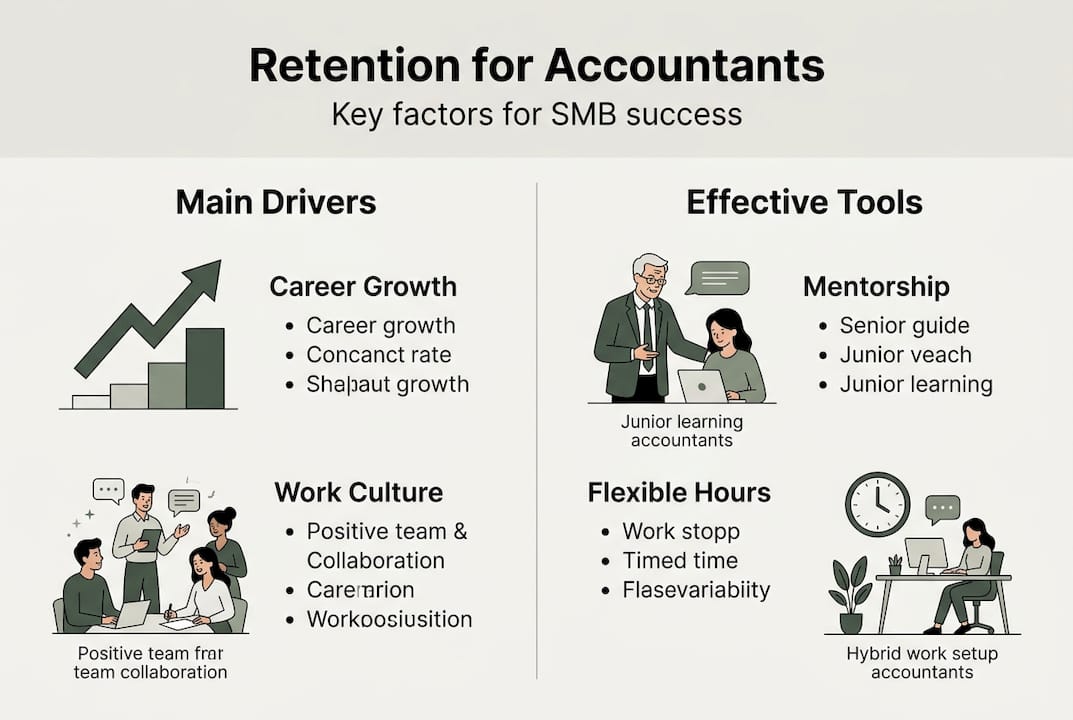
- Cultural support, career development, and flexibility are key to retaining accountants, beyond just pay.
- Mentorship, professional certification sponsorship, and recognition significantly boost accountant loyalty.
- Personalised, authentic retention strategies aligned with Birmingham’s local, collaborative business environment are most effective.
Many HR managers and finance directors at Birmingham SMBs assume that raising salaries is the surest way to stop accountants from walking out the door. The reality is more nuanced. High turnover persists even when compensation is competitive, pointing firmly to culture, career development, and flexibility as the real drivers of loyalty. This article unpacks the evidence behind accountant attrition, examines what genuinely motivates finance professionals to stay, and gives you a practical toolkit of strategies tailored to the realities of running a small or medium-sized business in Birmingham.
Table of Contents
- Understanding the accounting retention challenge
- What drives accountants to stay or leave?
- Evidence-based strategies for retention
- Tailoring retention to Birmingham's SMB environment
- A fresh perspective on accounting talent retention
- Next steps: expert support for your finance team
- Frequently asked questions
Key Takeaways
| Point | Details |
|---|---|
| Retention is more than pay | Culture, flexibility, and growth opportunities are key for keeping accountants in Birmingham SMBs. |
| Mentoring and development matter | Structured mentoring and professional training dramatically boost long-term accounting retention. |
| Tailor strategies locally | Adapt national best practices to Birmingham's unique SMB realities for maximum impact. |
| Affordable fixes make a difference | Internal recognition and flexible scheduling are proven, budget-friendly retention solutions. |
Understanding the accounting retention challenge
The scale of attrition in accounting is striking. Entry-level accountants face a 22% first-year attrition rate, with only 61% retained after three years. For a Birmingham SMB that has invested time and money into recruiting and onboarding a junior bookkeeper or accounts assistant, losing them within twelve months is a significant blow, both financially and operationally.
The gap between firm types is equally telling. Public firms lose 41% of junior accountants after three years, compared with 28% in corporate settings. This suggests that the working environment, not just the pay packet, shapes whether someone decides to stay. Smaller businesses that can offer a more personal, supportive atmosphere actually have a structural advantage, if they use it wisely.
| Setting | 3-year retention rate |
|---|---|
| Public accounting firms | 59% |
| Corporate finance settings | 72% |
| Entry-level average | 61% |
So why do traditional approaches fall short? Several patterns emerge from accountant retention challenges research:
- Reactive pay rises that come too late, after an employee has already mentally checked out
- Over-automated recruitment that brings in candidates who are not the right cultural fit
- Absent development pathways, leaving ambitious staff with no clear route forward
- Burnout from understaffing, particularly around tax deadlines and year-end periods
- Lack of feedback loops, meaning small frustrations fester until resignation
"Retention is not a one-time fix. It is an ongoing commitment to understanding what your people need and responding before they start looking elsewhere."
For Birmingham SMBs, the challenge is compounded by a competitive local market. Understanding the depth of available accounting talent pools in the region is a useful starting point, but attracting candidates is only half the battle. The other half is keeping them. Recognising the accountants' impact on SMBs helps leaders appreciate why retention deserves genuine investment rather than a last-minute counter-offer.
What drives accountants to stay or leave?
Understanding motivation is the foundation of any retention strategy. Research consistently shows that pay, while important, sits alongside several equally powerful factors.
| Motivator | Junior staff priority | Senior staff priority |
|---|---|---|
| Salary and benefits | Medium | High |
| Career development | Very high | Medium |
| Workplace culture | High | High |
| Flexible working | High | Medium |
| Mission and values | High | Medium |
| Mentorship | Very high | Low |
One of the most compelling data points concerns professional certification. CPA-certified accountants show 73% retention versus 49% among non-certified peers. This is not simply because certified staff earn more. It reflects the fact that supporting someone through a qualification builds loyalty, signals investment in their future, and aligns the individual's professional identity with the organisation. For Birmingham SMBs, sponsoring AAT, ACCA, or CIMA study is one of the most cost-effective retention tools available.
Mentorship is another standout factor. Mentorship in accounting boosts retention by 28%, a figure that should make any finance director sit up. A structured pairing of a junior accountant with a more experienced colleague costs very little but delivers a sense of belonging and direction that no pay rise can replicate.

For finance recruitment in Birmingham, the local context matters too. Birmingham has a diverse, ambitious workforce with strong community ties. Accountants here often value employers who reflect those values through inclusive management, visible leadership, and genuine flexibility. The employee retention strategies that work best in this environment are those that treat staff as individuals, not interchangeable resources.
Key motivators to address in your retention planning:
- Open management: regular one-to-ones and honest feedback conversations
- Value alignment: communicating the business mission clearly and consistently
- Inclusion: ensuring every team member feels seen and heard
- Growth visibility: showing staff exactly what their next step looks like
- Workload balance: addressing burnout before it becomes resignation
Evidence-based strategies for retention
Knowing why accountants leave is useful. Knowing what to do about it is better. Here are the strategies with the strongest evidence behind them, ordered by ease of implementation for a Birmingham SMB.
-
Structured onboarding: First impressions last. A clear, warm onboarding process that introduces new hires to the team, the tools, and the culture reduces early attrition significantly. Development programmes reduce first-year turnover by 47%, and much of that impact comes from getting the first ninety days right.
-
Flexible working arrangements: Remote or hybrid options, adjusted hours around busy seasons, and trust-based scheduling all signal respect for your staff's lives outside work. Flexible schedules and AI training can boost retention by up to 25%, making this one of the highest-return changes an SMB can make.
-
Internal mentoring programmes: Pair junior accountants with experienced colleagues for monthly check-ins. Keep it informal enough to feel genuine, but structured enough to be consistent.
-
Professional development support: Fund or part-fund AAT, ACCA, or CIMA study. Even contributing to exam fees signals that you see a future for the individual in your business.
-
Recognition and feedback: Regular, specific praise costs nothing. A simple monthly recognition moment in a team meeting can shift the emotional temperature of an entire department.
The AICPA retention strategies framework reinforces that career growth, recognition, and inclusive culture are the cornerstones of lasting retention. These are not expensive initiatives. They are commitments to treating people well.
Pro Tip: Before launching a new retention programme, survey your existing team anonymously. Ask what they value most and what frustrates them. The answers will almost certainly surprise you and will save you from investing in the wrong initiatives. You can find practical frameworks in our bookkeeper recruitment guide and our guide to hiring finance talent.
Balancing technology with human connection is also critical. AI-based tools can streamline routine tasks and free up your accountants for more meaningful work, which itself improves satisfaction. But over-automating the management relationship, replacing conversations with dashboards, erodes trust quickly.
Tailoring retention to Birmingham's SMB environment
National frameworks are a useful starting point, but Birmingham SMBs operate in a specific context that shapes what works. The city has a young, diverse population, a strong manufacturing and professional services base, and a growing tech sector that competes for the same analytical talent that finance teams need.
For Birmingham SMBs, prioritise low-cost flexibility, mentoring, recognition, and career pathing above all else. Here is how to put that into practice:
- Adjust flexibility around busy seasons: Tax deadlines and year-end periods are predictably intense. Offering compressed hours or additional leave immediately afterwards acknowledges the effort and prevents burnout from becoming a resignation trigger.
- Use two types of mentoring: Career mentoring (focused on long-term goals) and role-model mentoring (focused on day-to-day skills) serve different needs. Offer both where possible.
- Run quarterly pulse surveys: Short, anonymous, three-question surveys give you real-time data on team morale without the overhead of a formal annual review process.
- Celebrate local milestones: Exam passes, work anniversaries, and project completions are all worth marking. In a smaller team, these moments carry real weight.
- Avoid over-reliance on technology: Automated check-ins and AI scheduling tools are useful, but they cannot replace a manager who genuinely knows their team.
Pro Tip: If your HR resource is stretched, consider using the benefits of recruitment agencies to handle initial hiring, freeing your internal team to focus on the retention work that only they can do. Understanding the local accountant benefits of working with Birmingham-based professionals also helps you make the case internally for investing in local talent.
The accounting talent retention strategies that succeed in Birmingham share one quality: they feel authentic. Staff can tell the difference between a retention initiative that was copied from a consultancy report and one that reflects genuine care from leadership.
A fresh perspective on accounting talent retention
Here is something worth saying plainly: copying what large accountancy firms do is often the worst thing a Birmingham SMB can do for retention. Big firms default to wage wars, signing bonuses, and elaborate benefits platforms. These approaches require scale to sustain and frequently mask the underlying cultural problems that drive people out in the first place.
What actually works for smaller businesses is leaner, more human, and far more durable. When a junior accountant knows their manager's name, feels their contribution matters, and can see a genuine path to becoming a qualified professional, they stay. Not because they cannot get more money elsewhere, but because they do not want to leave.
Birmingham's business culture rewards collaboration and directness. Flat management structures, open-door policies, and leaders who are visible and approachable are not soft perks. They are competitive advantages. The accountants' value creation that SMBs depend on flows from people who feel trusted and invested in, not from people who are simply well paid.
Invest in mission-focused leadership. Make your values visible in everyday decisions. Respond to feedback quickly. These are the things that build the kind of loyalty that a counter-offer cannot undo.
Next steps: expert support for your finance team
Retaining great accounting talent starts with hiring the right people in the first place. At Ibaco Recruitment, we specialise in connecting Birmingham SMBs with thoroughly vetted finance professionals, from bookkeepers to qualified accountants, who are genuinely suited to your team's culture and working style.
Our Birmingham finance recruitment service is built around local knowledge and a deep understanding of what makes finance professionals thrive in smaller businesses. We handle the sourcing, screening, and matching so you can focus on building the kind of workplace people want to stay in. Explore our full range of finance recruitment services to see how we can support your next hire and your long-term retention goals.
Frequently asked questions
What is the average retention rate for entry-level accountants?
61% of entry-level accountants remain after three years on average, though this figure varies depending on whether they work in public practice or a corporate setting.
Does flexible working really improve retention in accounting?
Yes. Flexible schedules and AI training can increase retention by up to 25%, making it one of the most impactful and affordable changes an SMB can implement.
What low-cost retention ideas work best for small to medium businesses?
Low-cost strategies such as regular feedback, internal mentoring, career pathways, and flexible hours consistently outperform one-off pay rises for SMBs, particularly in Birmingham's collaborative business culture.
Are mentorship programmes effective for accountant retention?
Mentorship programmes increase accountant retention by around 28%, making them one of the most cost-effective tools available to smaller firms with limited HR budgets.