

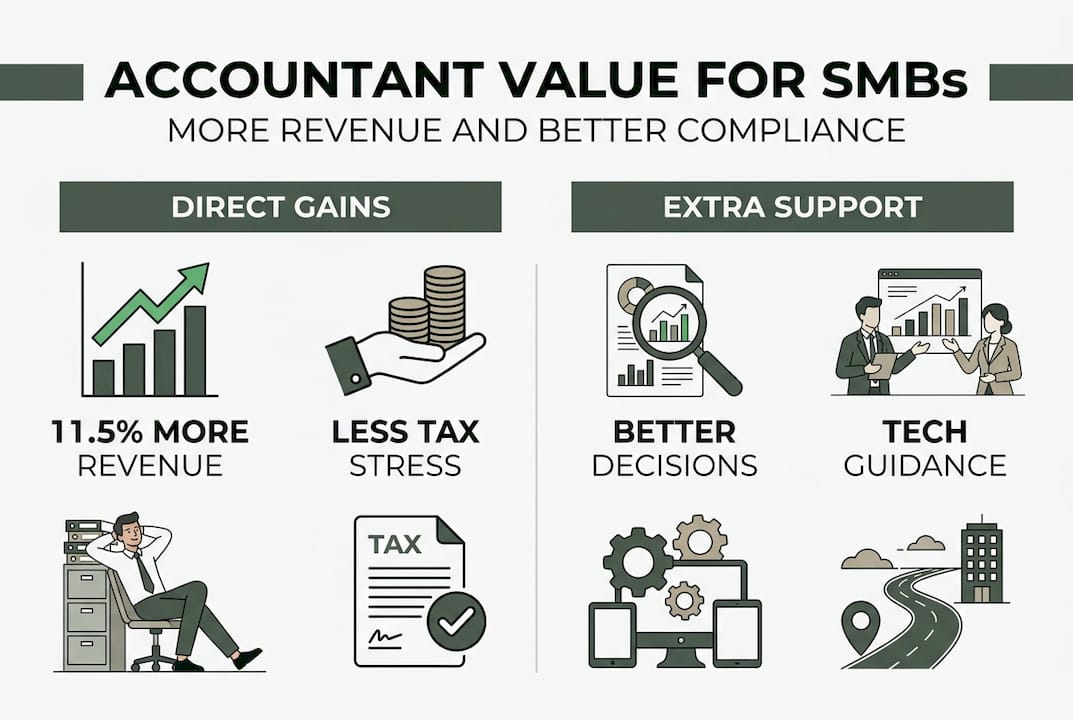
Most business owners in Birmingham think of their accountant as someone who sorts the books and files a tax return once a year. That view is costing them money. SMEs with accountants see 11.5% higher revenue, and 61% of small business owners name tax as their single biggest obstacle to growth. A qualified accountant does far more than crunch numbers. This guide covers what accountants genuinely do for small and medium-sized businesses, the compliance obligations you cannot afford to miss, how technology is changing the game, and how to hire the right person for your Birmingham business.
Table of Contents
- What does an accountant actually do for a small business?
- Core compliance responsibilities for UK SMBs
- Beyond compliance: Advisory, technology, and strategic support
- Key regulations and edge cases: IR35, MTD, and sector nuances
- How to choose the right accountant for your Birmingham SMB
- Advance your SMB with the right financial experts
- Frequently asked questions
Key Takeaways
| Point | Details |
|---|---|
| Compliance made easy | Accountants simplify tax, payroll, and statutory filings, minimising costly errors. |
| Strategic growth support | Modern accountants guide business planning, cash flow, and tax optimisation for faster growth. |
| Tech drives real-time insight | Cloud accounting platforms combined with local expertise let you track and forecast finances 24/7. |
| Choose wisely | Look for qualified, cloud-savvy, Birmingham-based professionals to maximise value. |
What does an accountant actually do for a small business?
The word "accountant" covers a wide range of activities, and it helps to separate them clearly. Bookkeeping is the daily recording of transactions. Payroll management ensures your staff are paid correctly and on time. VAT returns, corporation tax submissions, and statutory accounts are the formal obligations every limited company faces. Understanding the role of bookkeepers alongside accountants helps you see where each professional adds the most value.
Accountants for UK SMEs handle core tasks including bookkeeping, payroll, VAT, and statutory accounts prepared under FRS 102 or FRS 105. These are not optional extras. They are legal requirements, and getting them wrong carries real penalties. For a fuller picture of accounting roles in Birmingham and how they map to business size, it is worth reviewing what local firms typically offer.
Here is a summary of the core duties a qualified accountant covers for a Birmingham SMB:
- Maintaining accurate financial records throughout the year
- Preparing and submitting VAT returns on time
- Running payroll and managing PAYE obligations
- Filing annual accounts with Companies House
- Submitting corporation tax returns to HMRC
- Advising on allowable expenses and tax efficiency
- Supporting cash flow monitoring and financial planning
Following bookkeeping best practices is the foundation on which all of this sits. Without clean records, even the best accountant cannot do their job properly.
"The most successful SMB owners stop seeing their accountant as a cost and start treating them as a growth partner. That shift in mindset is often the turning point."
For detailed small company compliance guidance, it is worth understanding exactly which standards apply to your business size before your next filing deadline.
Core compliance responsibilities for UK SMBs
Compliance is not glamorous, but it is non-negotiable. Compliance duties involve filings to Companies House, tax submissions to HMRC, accurate record-keeping, and understanding audit exemptions. Miss a deadline and you face automatic penalties. Miss several and HMRC may investigate.
Here are the key compliance steps every Birmingham SMB limited company must manage:
- File annual accounts with Companies House within nine months of your financial year end
- Submit a corporation tax return to HMRC within twelve months of your accounting period
- Pay any corporation tax owed within nine months and one day of your year end
- File VAT returns quarterly if your turnover exceeds the £90,000 threshold
- Maintain payroll records and submit Real Time Information (RTI) to HMRC each pay period
- Keep financial records for a minimum of six years
Two accounting standards apply to small businesses in the UK. FRS 102 applies to small companies, while FRS 105 is a simpler standard for micro-entities with turnover below £632,000. Choosing the right standard affects how you present your accounts and what disclosures you need to make. FRS 102 and FRS 105 compliance is an area where a qualified accountant earns their fee quickly.
Most SMBs qualify for audit exemption if they meet two of three criteria: turnover below £10.2 million, balance sheet below £5.1 million, or fewer than 50 employees. Understanding why hiring accredited accountants matters becomes obvious when you see how many rules interact.
Pro Tip: Set a calendar reminder three months before each filing deadline. That gives your accountant enough time to prepare accurate figures without rushing, which reduces errors and the risk of penalties.
Beyond compliance: Advisory, technology, and strategic support
Once your compliance is under control, a good accountant becomes something more valuable: a strategic adviser. Cloud accounting methodologies include cash flow forecasting, tax planning, and strategic advisory services that help SMBs make better decisions faster.
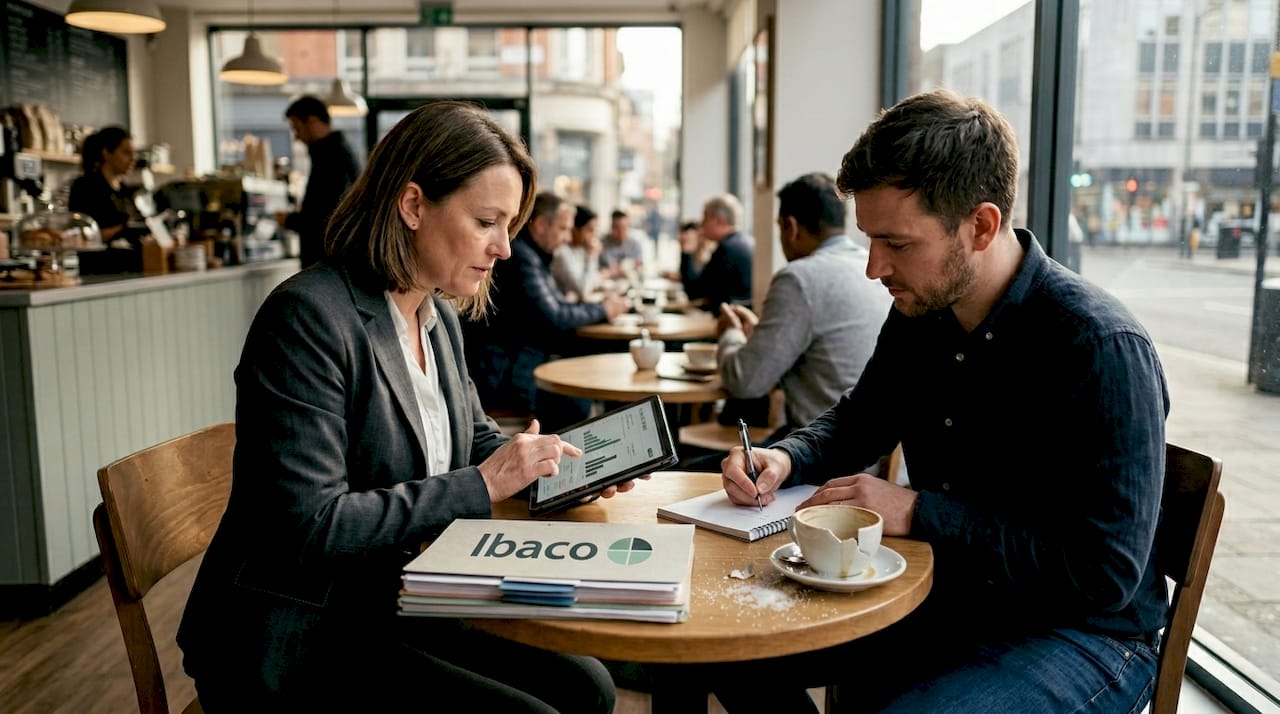
Platforms like Xero, QuickBooks, and Sage have transformed what is possible. Real-time bank feeds, automated invoicing, and live dashboards mean your accountant can spot a cash flow problem in March rather than discovering it in December. For a detailed breakdown of the tools available, the Xero vs Sage comparison is a useful starting point for Birmingham businesses.
Cloud technology is bridging the gap between DIY bookkeeping and professional advisory, giving SMBs access to insights that were once only available to larger firms. The table below shows how the three approaches compare:
| Approach | Cost | Compliance cover | Strategic advice | Real-time data |
|---|---|---|---|---|
| DIY only | Low | Risky | None | Limited |
| Traditional accountant | Medium | Strong | Moderate | Delayed |
| Cloud-powered accountant | Medium to high | Strong | High | Live |
The advisory layer is where SMBs see the biggest return. Tax optimisation, R&D credit claims, and accurate forecasting can save or generate far more than the accountant's fee. Strengthening accountant-SME partnerships is increasingly seen as a competitive advantage for growing businesses.
Pro Tip: When interviewing accountants, ask specifically which cloud platform they use and how often they will review your figures with you. Monthly check-ins are a sign of a proactive adviser, not just a compliance processor.
Key regulations and edge cases: IR35, MTD, and sector nuances
Some regulations catch Birmingham SMBs off guard because they only apply in specific circumstances. Knowing your triggers matters.
IR35 and off-payroll working rules affect businesses that engage contractors through personal service companies. If HMRC determines that a contractor is effectively an employee, the engaging business becomes liable for income tax and National Insurance. This is a costly mistake that a specialist accountant can help you avoid.
Making Tax Digital (MTD) is being rolled out in stages. MTD for VAT is already mandatory for all VAT-registered businesses. MTD for Income Tax Self Assessment (ITSA) will apply to sole traders and landlords with income above £50,000 from April 2026, and above £30,000 from April 2027.
The table below summarises the key thresholds and triggers:
| Regulation | Who it affects | Key threshold | Deadline |
|---|---|---|---|
| MTD for VAT | All VAT-registered businesses | £90,000 turnover | Already live |
| MTD for ITSA | Sole traders and landlords | £50,000 income | April 2026 |
| IR35 off-payroll | Businesses using contractors | Medium/large companies | Ongoing |
| CIS | Construction sector businesses | Any subcontractor payments | Ongoing |
| R&D tax credits | Innovative SMBs | Qualifying expenditure | Annual claim |
According to UK SME statistics, the majority of small businesses with employees are in sectors where at least one of these edge cases applies. Common mistakes SMBs make in this area include:
- Assuming IR35 does not apply because the contractor has their own company
- Missing MTD deadlines because they were unaware of the rollout timetable
- Failing to register for the Construction Industry Scheme when taking on subcontractors
- Not claiming R&D credits because they assumed their work did not qualify
- Mixing personal and business expenses, which complicates every other calculation
How to choose the right accountant for your Birmingham SMB
With so much at stake, choosing the right accountant is one of the most important decisions you will make. Here is a practical checklist to guide your selection:
- Check qualifications. Look for ICAEW, ACCA, or AAT membership. These bodies require ongoing professional development and hold members to ethical standards.
- Assess cloud proficiency. Ask which platforms they are certified on. Xero, QuickBooks, and Sage all offer adviser certifications.
- Evaluate local knowledge. A Birmingham-based accountant understands regional business networks, local sector trends, and the specific pressures facing West Midlands SMBs.
- Understand the fee structure. Fixed-fee packages typically range from £25 to £300 per month depending on service scope. Fixed fees are easier to budget than hourly rates.
- Ask about communication. How often will they contact you proactively? A good accountant does not wait for you to call.
- Request references. Speak to other SMBs they work with, ideally in your sector.
For guidance on screening accounting qualifications during the hiring process, there are clear frameworks that help you assess candidates objectively. Understanding accounting qualifications in Birmingham and what each level means for your business is equally important before you commit.
Watch out for warning signs: vague pricing, reluctance to explain their processes, no professional body membership, or a lack of familiarity with your industry. Firms such as Sigma Chartered Accountants demonstrate what a well-structured local practice looks like, which gives you a useful benchmark.
Pro Tip: Always verify ICAEW or ACCA membership directly on the relevant professional body's website. Membership can lapse, and you want to be certain your accountant is currently regulated and insured.
Advance your SMB with the right financial experts
Finding an accountant who genuinely understands your business takes more than a quick search. You need someone with the right qualifications, the right tools, and real knowledge of the Birmingham market. That combination is rarer than it sounds, and the wrong hire can set your compliance and growth plans back significantly.
At Ibaco Recruitment, we connect Birmingham SMBs with thoroughly vetted accountants and bookkeepers who are ready for permanent roles. Our hire accountants in Birmingham service matches you with candidates who hold recognised qualifications, are proficient in leading cloud platforms, and understand the West Midlands business landscape. Through our recruitment services, most businesses receive their first matched candidates within two weeks, with no upfront fees. If you are ready to bring the right financial professional into your team, we make the process straightforward from the first conversation.
Frequently asked questions
Do all Birmingham SMBs need a fully qualified accountant?
Not always. Micro-businesses with simple finances can manage basic tasks themselves, but a qualified accountant ensures compliance is watertight and tax planning is optimised, which typically saves more than the fee costs.
What are the most common compliance mistakes SMBs make?
Late filings, poor record-keeping, and missed VAT or PAYE deadlines are the most frequent errors. Each carries automatic penalties that accumulate quickly if left unresolved.
Are there advantages to hiring a local Birmingham accountant?
Yes. Local professionals understand regional business networks, sector-specific pressures, and the West Midlands economy. Firms like Sigma Chartered Accountants illustrate how local expertise translates into more relevant, practical advice.
How much should a small business budget for accountancy services?
Expect to pay between £25 and £300 per month depending on the scope of services. Fixed-fee packages are the most common structure for SMBs and make budgeting straightforward.
Can cloud software fully replace accountants for SMBs?
Cloud tools handle routine data entry and reporting well, but expert oversight remains essential for compliance accuracy, tax strategy, and interpreting what the numbers actually mean for your business.